
Assignment Details: For this project, I was asked to create a system of 10 pictograms that visually represented abstract ideas without using words. The concepts were divided into categories including transitions, emotions and states, values and principles, and thresholds and boundaries. The goal of the assignment was to create symbols that communicated invisible ideas through simplified visual forms while still functioning together as one cohesive system. These pictograms later became part of a larger exhibition project called Image = Word, where the work was displayed alongside projects created by my peers.
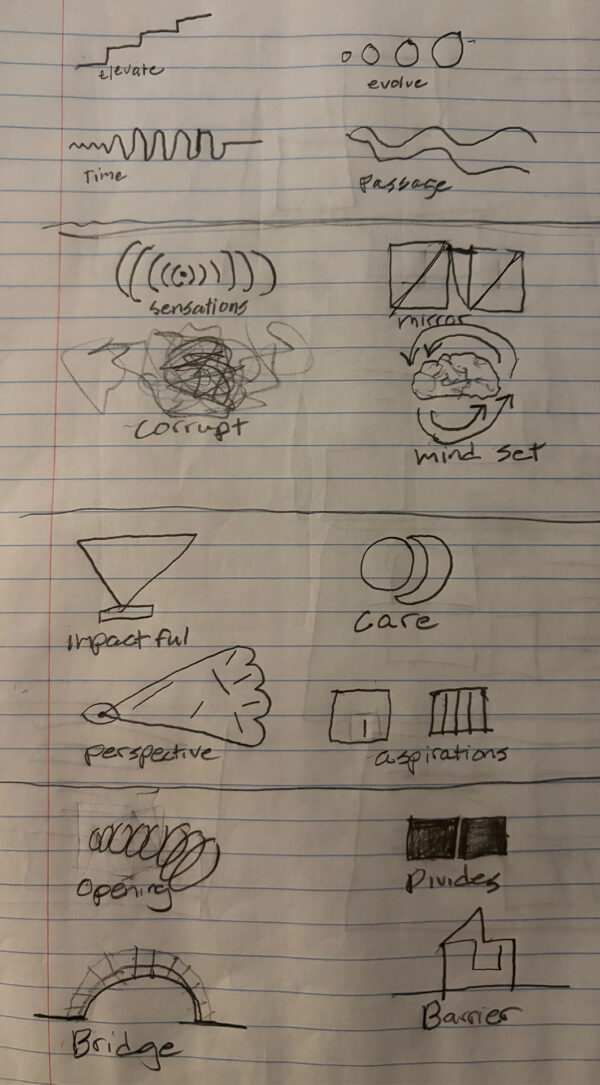
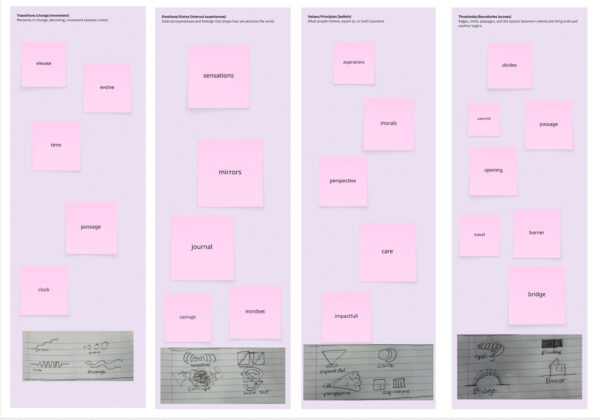
Process Work: The process for this project began with brainstorming and organizing different abstract concepts into categories. I explored words connected to movement, emotions, values, and boundaries, then started sketching possible ways these ideas could be translated into visual symbols. During the early stages, I created quick hand-drawn sketches to test shapes, spacing, repetition, line movement, and geometric structures that could communicate each concept in a more conceptual rather than literal way. As the project developed, I refined the strongest ideas and focused on building a consistent visual language across all 10 pictograms. I experimented with symmetry, line weight, balance, and repetition so each symbol could feel connected as part of the same system while still representing different meanings. The sketching process allowed me to test multiple directions before recreating the final pictograms digitally in Adobe Illustrator.
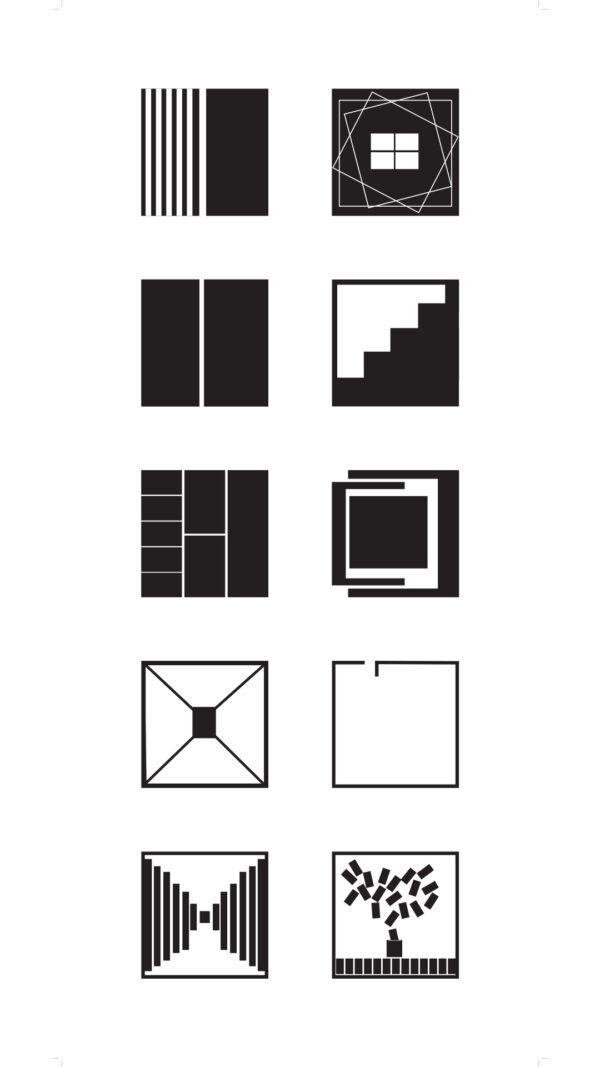
Final: The final outcome is a collection of 10 geometric pictograms designed as a unified visual system. Each pictogram represents a different abstract concept while maintaining consistent forms, proportions, spacing, and visual structure throughout the entire set. I used simplified black-and-white geometric compositions to keep the symbols visually clear and recognizable at different scales. Although each pictogram communicates a separate idea, the final system was designed to feel cohesive when viewed together within the exhibition space. The project challenged me to think about how invisible emotions, experiences, and ideas can be translated into visual communication through minimal forms and structured design systems.